.png?width=2196&height=2196&name=OS%20(1).png)



.svg)

-3.png?width=224&height=213&name=Accelerate%20(2)-3.png)






 Early on most weekdays, Nevin Baker is already preparing for his first surgery of the day. By 7 AM, he's in the operating room at his hospital, where he's worked as a nurse anesthetist for 25 years.
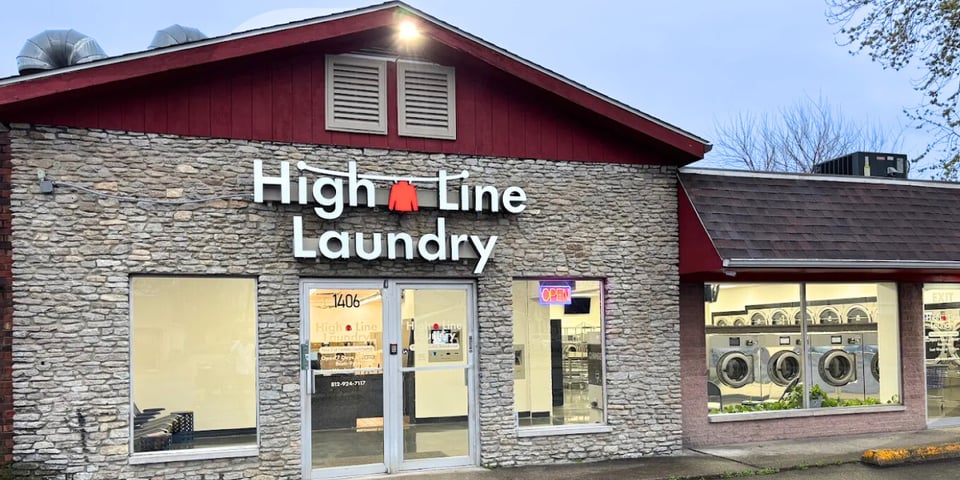
But what happens after his last case in the late afternoon is where his entrepreneurial journey truly comes alive. Just months after a complete renovation, his New Albany, Indiana laundromat, High Line Laundry, is thriving with impressive monthly revenue, earning exceptional ratings with hundreds of glowing reviews, and running with a full team of employees. And he's doing it all while maintaining his demanding medical career.
This isn't a story about inherited wealth or hedge fund backing. It's about a methodical, systems-driven approach to business building that mirrors the precision and discipline Nevin brings to his healthcare career.
The Search for Something Different
.png?width=304&height=304&name=High%20Line%20(4).png) After 25 years in healthcare, Nevin knew he was "time poor." He'd explored restaurants, hotels, and car washes. Nothing fit his lifestyle or risk tolerance. During the pandemic he discovered Cody Sanchez's concept of "boring businesses." The laundromat industry caught his attention for one simple reason: the competition.
After 25 years in healthcare, Nevin knew he was "time poor." He'd explored restaurants, hotels, and car washes. Nothing fit his lifestyle or risk tolerance. During the pandemic he discovered Cody Sanchez's concept of "boring businesses." The laundromat industry caught his attention for one simple reason: the competition.
"I'm not competing with Jeff Bezos. I'm competing with Mom and Pops. The playing field is even," Nevin explains.
Unlike many aspiring operators who browse listings online, Nevin took a decidedly old-school approach. "Anybody can look for a laundromat in their underwear on a Sunday on the computer. I really wanted to get out there and see what this space was all about."
What he found shocked him and gave him confidence.
"I walked into some of these places and found exposed plumbing and electrical hazards where children could have gotten in. I asked the attendant, 'This isn't very safe, is it?' They said, 'Oh, it's been like that for months.' This wasn't just one location, it was multiple. I thought to myself, "if this is my competition, I got a chance."
The search took over a year, when he found a family operation in New Albany, Indiana, where the patriarch's children were bowing out of the business their father had built. The owner was downsizing and getting older.
The "Zombiemat" Reality & Quarter-Counting Problem
What Nevin had purchased was a "zombiemat", a laundromat stuck in time with serious safety and security issues.
Phase one was straightforward but essential: addressing the security issues and literally cleaning up the laundromat and machines.
The equipment mix was inefficient. "I had three big 55-pound machines that were always being used and 26 or 28 crossover machines that were occasionally used. Most of the revenue came from my three 20-year-old Wascomats. One was so old the basket rusted out—I cannibalized it for parts."
For the first several months of ownership, Nevin ran the laundromat the old-fashioned way. It was an education in what not to do.
"I was counting quarters once a week. I thought to myself, there's got to be a better way. I can't do this. It wasn't efficient. I couldn't see which machines were performing, who turned them, how many turns, I was just counting quarters every week trying to figure out how much money I made, if I made any, which I didn't."
This experience crystallized what would become a core business philosophy: systems make or break your business.
The Laundroworks Connection & Tech Transformation
 Nevin's relationship with Laundroworks predates his laundromat ownership by a couple of years. During his search phase, he'd been in contact with Joe Martinez, a Cents Account Executive, who told him: "Do you have a laundromat yet? You gotta get one first."
Joe would check in every few months. Nevin promised, "You will be my first call."
True to his word, Joe was his first call when he closed in May of 2024. When it came time for renovation, "There wasn't a second thought. This was our goal from day one."
After evaluating other payment systems, Nevin chose Laundroworks. "The ease of use for the customer and the back office was very powerful."
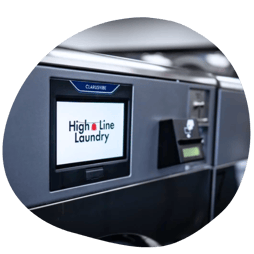
Around Thanksgiving, he shut down for phase two of his renovations, transforming 2,200 square feet with new Claris Vibe Touch machines and Laundroworks.
"I knew I wanted to take this zombiemat to a 21st century laundromat. As soon as construction was completed, the Laundroworks system went in right away. Very quick. The new machines and Laundroworks systems communicated easily."
The Cents Advantage: Systems That Scale
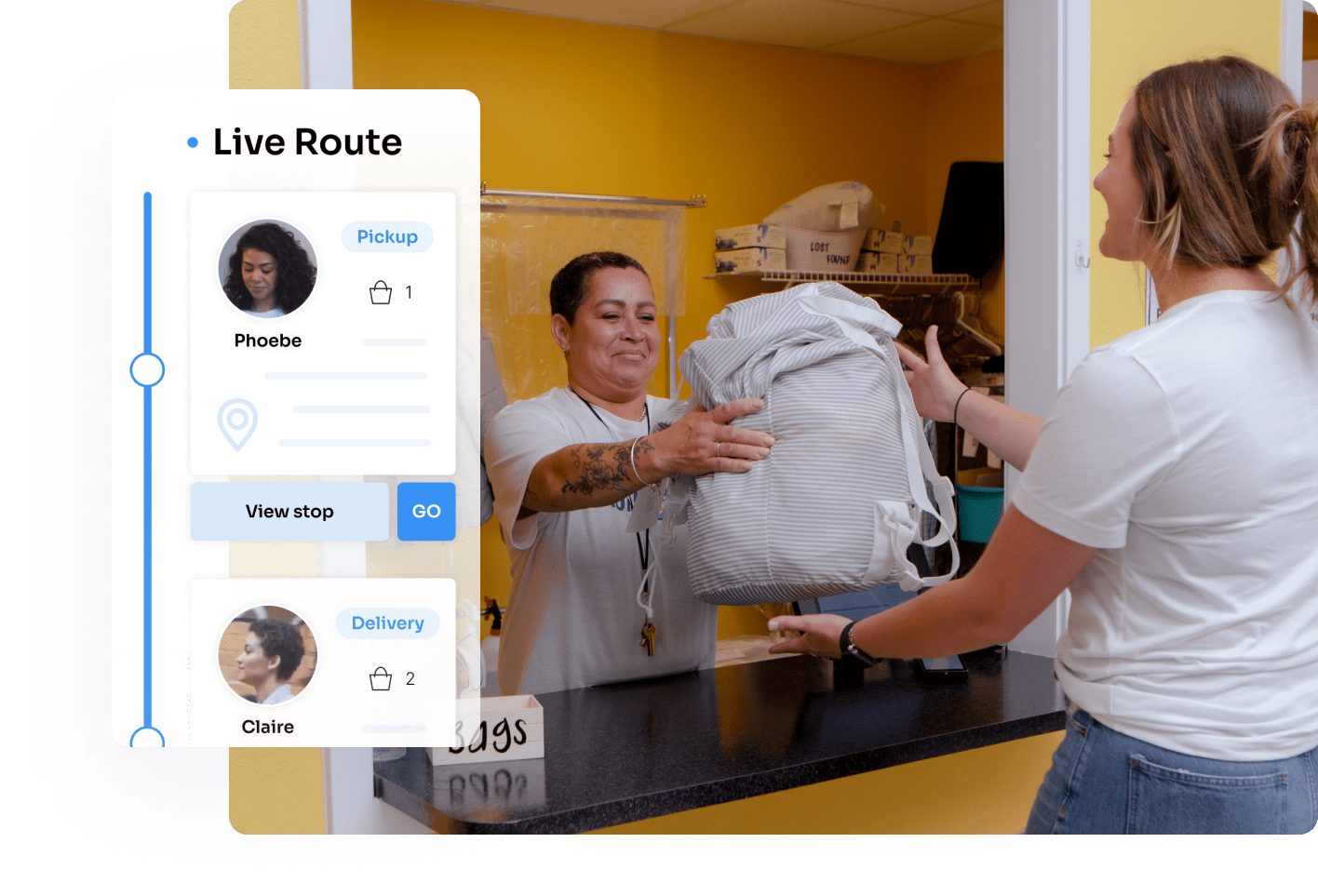
When Cents acquired Laundroworks, Nevin found his complete solution. "I've got the best of both worlds. Laundroworks handled self-service operations—inventory, revenue, machine performance. Cents takes us to the next level with route-based pickup and delivery."
The digital systems transformed operations. After using paper timecards, Nevin switched to Cents POS. "I can do payroll for five people in 5-10 minutes with a digital trail and no confusion." This efficiency lets him balance his career with strategic laundromat involvement with evenings greeting customers and checking in on operations.
Strong systems also won him a commercial client. When a reconditioning company complained about their dry cleaner mixing up coats, Nevin's pitch was simple: "Their systems are broken. Here's how we bring in laundry, weigh it, track it, and one person handles each order from start to finish to ensure nothing goes missing."
The platform enables total visibility. "I can see turns per machine, who started them, revenue trends, information other laundromats can't get. Am I growing? Did I lose money? Where? How can we fix that? You can see it day-to-day or annually."
His assessment: "Cents is an all-in-one business solution. We have self-serve, wash-dry-fold, commercial, and route-based pickup coming. No other platform can do that."
The Laundry Technological Renaissance
.png?width=344&height=344&name=High%20Line%20(3).png) Nevin sees the industry at an inflection point. "We're in a technological Renaissance in the laundry space. How has technology almost passed by something we have to do every week? In 20 years, we'll realize we were in the middle of it—new payment systems coming online, robotics for folding at the Clean Show."
Nevin sees the industry at an inflection point. "We're in a technological Renaissance in the laundry space. How has technology almost passed by something we have to do every week? In 20 years, we'll realize we were in the middle of it—new payment systems coming online, robotics for folding at the Clean Show."
His warning to operators: "If you're not at the vanguard now, in 10 years you'll look around and ask, 'How come I'm not successful?'"
Phased Growth Strategy
Nevin's approach has been methodical, building in deliberate phases.
-
Phase One: Clean up and stabilize with existing equipment
-
Phase Two: Renovate 2,200 square feet with new equipment and modern payment systems.
-
Phase Three (In Progress): Converting the remaining 1,100 square feet from outdated equipment into an operational space—shelves, janitorial closet, folding area, break room.
-
The final phase? Pickup and delivery. "That will allow us to outgrow this space. Then I need another laundromat."
He's realistic about the pace. "Some people have financing, hedge funds, family money—they open five or six laundromats in three years. This is just me, doing it step-by-step so we grow in an organized manner. Cents has allowed us to do that."
The Results
In just seven months post-renovation, the transformation has been dramatic:
-
Significant monthly revenue growth
-
4.9-star rating with 200+ Google reviews (Check out High Line Laundry on Google!)
-
Five employees managed efficiently
-
Three revenue streams: self-service, wash-dry-fold, and commercial
-
Pickup and delivery launching in the spring
Advice for New Operators & Looking Forward
.png?width=254&height=254&name=High%20Line%20(5).png) Having rebuilt a zombiemat while working full-time in medicine, Nevin offers blunt advice.
Having rebuilt a zombiemat while working full-time in medicine, Nevin offers blunt advice.
"Make sure you're ready. If you like to watch TV, read a book instead. If you drink every week, stop for a month or two. If you can't control yourself, you'll never control your business. Invest in yourself before you invest in your laundry."
On business preparation: "Educate yourself before you spend a nickel. Write a business plan, not for financing, but for you. Get a mentor to review it. I had a three-year plan, and it took me eighteen months just to find a laundromat."
His most emphatic advice centers on safety: "A lot of laundromats are in crime-ridden neighborhoods. You can have the best team, parking, and metrics—if it's not safe, no one will come. Do not buy it if it's not safe."
His success offers a blueprint: thorough research, careful location selection, proper systems from day one, methodical phases, and technology that creates operational freedom.
The story of High Line Laundry proves the laundromat industry is experiencing a technological renaissance—and those who embrace it early are positioned to thrive.