.png?width=2196&height=2196&name=OS%20(1).png)



.svg)

-3.png?width=224&height=213&name=Accelerate%20(2)-3.png)








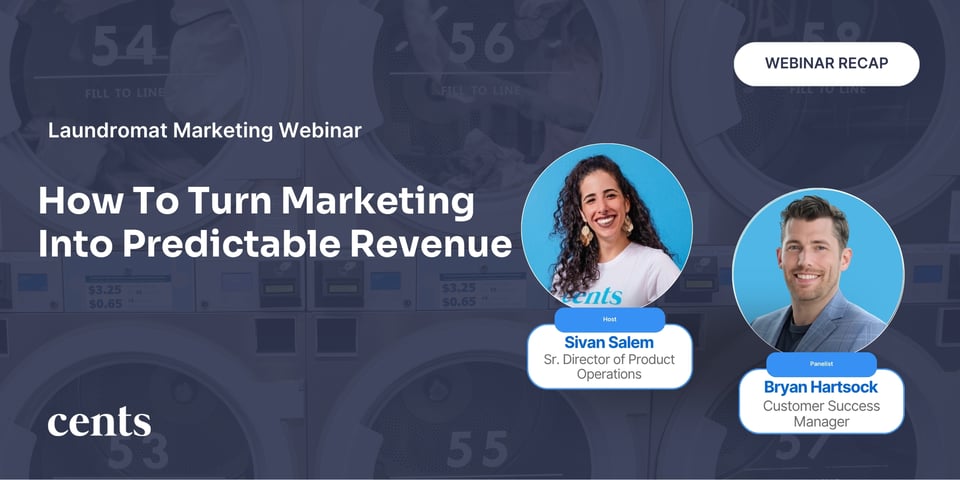
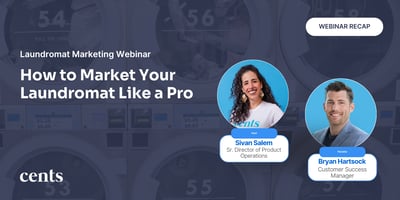
If you've ever asked "how do I get more customers?" you're not alone. Bryan Hartsock, Customer Success Manager, who's worked with over a thousand laundromat owners, says it's the question he hears more than any other.
In this webinar, he broke down the marketing principles behind building a business that generates customers predictably, instead of hoping the next one shows up.
Key Actionable Takeaways:
Know Your LTC-to-CAC ratio
Bryan opened with a story about a mysterious box that turned $1 into $3, the point being that you don't need to understand every gear to know a machine is worth feeding, as long as you know one thing: what you put in reliably returns more than you put in. That's the whole idea behind the ratio of lifetime gross profit to customer acquisition cost. As Bryan put it, "It's what a customer cost me to get them, and what a customer is worth over the lifetime of the customer." He shared some real benchmarks to aim for: a 1-to-1 ratio is a warning sign, 3-to-1 means you're getting there, and 5-to-1 or higher is where you want to live.
Focus On High-Paying Customers
Not every customer is worth chasing equally. Bryan pointed to two avatars worth prioritizing for pickup and delivery: commercial accounts and high-end residential customers. "It's mainly because they pay the most money, and they stay the longest," he explained. If you already have some of these customers, Bryan recommends surveying them: how they found you, what convinced them to buy, whether a review or testimonial played a role. Those breadcrumbs become invaluable later when you're building landing pages and ads aimed at attracting more of the same.
Compete On Outcome and Value
Bryan used the story of Starbucks to make this point stick. In the early 1980s, canned coffee brands were locked in what he called "the commodity race to the bottom," undercutting each other on price until margins and quality both collapsed. Howard Schultz changed the game not by selling cheaper coffee, but by selling an experience, and today people happily pay $7 or $8 for a latte. Bryan's takeaway: "If you compete strictly on price, you are playing a game where the only way to win is to be the cheapest. When you differentiate your customer experience, your brand and your value, you escape the race to the bottom entirely."
Customer Journey Matters
Bryan shared two free playbooks built for two different stages of business. If you're brand new to pickup and delivery, the Beta Sprint playbook walks you through building a small beta group of about five customers over three to four weeks, free of charge, low pressure, and designed to help you and your team learn the process before you start charging for it. If you already have customers and need more, the Scaling Engine playbook focuses on building a value-driven offer, creating dedicated landing pages for specific customer avatars, and following up fast. As Bryan noted on the importance of speed, "We live in a world of attention... you want to be able to follow up real fast to be able to connect with that customer to get them to offer."
Wrapping Up
Marketing that produces predictable revenue isn't about chasing the next big tactic. It's about understanding your numbers, knowing who your best customers are, building an offer people actually want, and letting the right systems run in the background. As Bryan put it, the goal isn't to personally turn every gear yourself, but to understand the machine well enough to build it, improve it, and let it work for you.
Catch up on past sessions, How to Market Your Laundromat Like a Pro, and Mastering Google Reviews for Your Laundromat, to keep building out your marketing playbook.