.png?width=2196&height=2196&name=OS%20(1).png)



.svg)

-3.png?width=224&height=213&name=Accelerate%20(2)-3.png)









Opening your first laundromat taught you how to run a laundromat. Opening your second teaches you how to run a business, one that has to work whether or not you're standing behind the counter.
That's the leap a lot of owners underestimate. Store #1 usually runs on hustle: you know most regulars by name, you can eyeball whether the machines are turning fast enough, and if something breaks, you're the one who either fixes it or gets it fixed, because no one else on-site can make that call. None of that scales. The moment you sign a lease on a second location, you stop being an operator and start being a manager of operators. The systems, staffing, and financing decisions you make in the first 90 days will decide whether location #2 becomes your best asset or your biggest headache.
We talk to laundromat owners at every stage of this jump, from single-store operators weighing their first expansion to multi-store owners managing 20+ locations. Here's what actually separates a smooth second-location launch from a stressful one, starting with how to know you're actually ready.
Is Your Laundromat Ready to Scale? 8 Signs It's Time for a Second Location
Expansion should be a response to evidence, not ambition. Here's what that evidence typically looks like.
1. Store #1 has produced 12+ months of consistent, provable profit
One strong quarter isn't a trend. Lenders, and honestly your own peace of mind, want to see a full seasonal cycle of stable or growing revenue, not just top-line sales, but real net profit after utilities, rent, labor, and maintenance. If you haven't already, this is the point to get precise about your margins rather than going on gut feel. The Coin Laundry Association (CLA) notes utility costs alone regularly run over a fifth of gross revenue, so "busy" and "profitable" are not the same thing. Know the difference before you commit that cash flow to a second lease.
2. You've hit a real capacity ceiling
Machines running back-to-back during peak hours, a wash-and-fold queue that regularly backs up, or turns-per-day that have plateaued even as demand keeps growing are signs you've outgrown the four walls you're in, not signs you're doing something wrong. A second location is often the more sensible fix than trying to squeeze more throughput out of a maxed-out floor plan.
3. You're turning away business you can't fulfill
Missed calls, customers waitlisted for pickup and delivery slots, or a commercial account you had to say no to because you didn't have the capacity: that's demand data. It's worth tracking how much revenue you're actually leaving on the table before you assume it justifies a whole new lease. Missed calls alone cost the average laundromat real money every year, and that's before you even factor in the customers who simply drove past.
4. Your first store runs well without you in it
This is the big one. If revenue dips the moment you take a weekend off, you don't have a scalable business yet, you have a well-paying job. Owners who scale successfully usually get here first: documented SOPs, a manager who can make decisions, and remote visibility into machine activity, sales, and staff performance from their phone. If you can't run store #1 remotely with confidence, you're not ready to split your attention across two.
5. You've built financial reserves beyond working capital
Opening a second location costs real money before it generates a dollar: buildout, equipment, permits, initial payroll, marketing. Owners who scale on a stable footing typically have reserves set aside specifically for expansion, separate from the operating cushion that protects store #1. If a slow month at either location would put you in a bind, that's a sign to keep building reserves before you sign anything.
6. You understand your local market, and there's still room in it
Before you fall in love with a second site, map out your existing customer base's geography. Is there a nearby neighborhood, corridor, or commercial cluster that's underserved, or would a second store simply split your own foot traffic in half? Choosing the right location matters just as much the second time as it did the first, arguably more, because now you're also managing the risk of cannibalizing your own customer base.
7. You've priced out the real cost of a second location, and it still works
Startup costs for a new build, a retool of an existing "zombiemat," or an acquisition all look very different on paper. Before you get emotionally attached to an opportunity, run the numbers the way you would as an investor evaluating someone else's laundromat. Our 2026 laundromat startup cost breakdown is a good starting benchmark. Multi-location operators also typically command higher valuation multiples than single-store shops when the day eventually comes to sell, a sign that the market rewards the operators who scale well.
8. You're already thinking like a multi-unit operator
If you find yourself benchmarking your store against multi-location peers, reading about how The Wash House scaled to 20+ locations or how Linen Fresh built a multi-state growth strategy, and thinking "that's the model" instead of "that sounds exhausting," that instinct is worth trusting. The laundry industry remains overwhelmingly independent; more than 95% of U.S. laundromats are single-site operators with no chain affiliation, which means the owners who do successfully build a second, third, or tenth location are the exception, not the rule, usually because they treated growth as a deliberate strategy, not an accident.
If most of these sound familiar, you're not just ready to consider a second laundromat, you're behind schedule. Here's how to actually do it.
See what running two locations looks like on one platform. Schedule a free demo with Cents and we'll show you how multi-location reporting, staffing, and remote management actually work day to day.
Opening Your Second Laundromat, Step by Step
Step 1: Audit store #1 before you plan store #2
Before you look at a single new listing, get brutally clear on what's actually working. Which services drive the most margin: self-service, wash-and-fold, pickup and delivery, commercial accounts? Which hours and days are your busiest? What does your true cost per pound or per load look like once utilities and labor are factored in? This audit becomes your blueprint. You're not opening "a laundromat," you're replicating the specific formula that already works, and skipping the parts of store #1 you'd rather not repeat.
This is also the moment to formalize what's still living in your head. Write it down as an actual business plan for the new location. You'll need it for financing anyway, and it forces you to separate what worked from what you got lucky with.
Step 2: Decide how you're acquiring location #2
There isn't one right path, there's the path that fits your capital, timeline, and risk tolerance:
-
Build new: full control over layout, equipment, and branding, but the longest timeline and highest upfront cost.
-
Retool an existing laundromat: buying an underperforming or dated store and modernizing it, often called taking over a "zombiemat." Faster to cash flow than new construction, but you inherit someone else's lease terms, equipment condition, and sometimes reputation.
-
Acquire a turnkey operation: buying a healthy, already-profitable store. Fastest path to revenue, but you'll pay a premium, and multi-location buyers are increasingly competing for the same well-run listings.
Whichever route you choose, evaluate it with the same due diligence rigor you'd want a buyer to use if they were evaluating your first store.
A view worth considering: bigger instead of more. Not everyone agrees that a second small store is the right next move. Eastern Funding has argued that the industry is increasingly shifting toward fewer, much larger format laundromats (often 5,000+ square feet) that use economies of scale to support commercial accounts and high-volume pickup and delivery in ways a second small location can't easily replicate. Before you default to "open store #2," it's worth running the numbers on whether relocating, expanding, or retooling store #1 into a larger format gets you the same growth with one lease and one team instead of two.
Step 3: Choose a location that expands your market, not just your address count
The single biggest mistake in second-location expansion is picking a site because it's convenient for you, not because it's genuinely underserved. Study drive times and walkable radius from store #1, renter density, income levels, competing laundromats, and, critically, whether the new site would pull existing customers away from your first location instead of reaching new ones. A second store that just redistributes your current customer base isn't growth, it's overhead.
Step 4: Finance it like an expansion, not a startup
Financing your second location looks different than financing your first, for better and worse. On one hand, you now have operating history and real financials to show a lender, which most SBA lenders and equipment financiers weight heavily. On the other, you're underwriting two locations' worth of risk on one balance sheet. Common paths include SBA 7(a) loans, equipment financing tied specifically to washers and dryers, seller financing on an acquisition, and, for larger equipment purchases, Section 179 deductions that can meaningfully offset your tax liability the same year you buy. We've broken down financing options for multi-store owners in more detail here, and our financing webinar with Eastern Funding walks through lender expectations directly.
Step 5: Unify your systems before you open, not after
This is the step most owners underestimate, and the one that determines whether managing two stores feels twice as hard or barely harder at all. If your first location runs on a patchwork of spreadsheets, a standalone card system, and word-of-mouth scheduling, none of that will scale to two sites. Before opening day, you want:
-
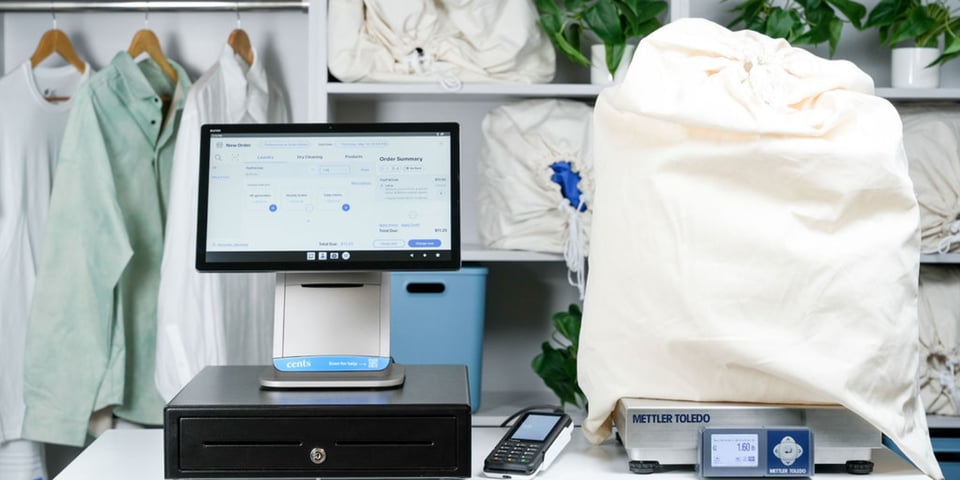
One dashboard for both locations: a business management platform that shows sales, labor, and machine performance across every store side by side, like Cents Business Manager, rather than logging into two separate systems.
-
Remote machine visibility: hardware like Cents Connect's Penny readers or a Laundroworks payment system with LaundroPortal so you can see machine activity, revenue, and maintenance needs at both stores without a site visit.
-
A single customer and marketing database: so loyalty, memberships, and promotions work across your growing footprint instead of resetting at each address.
-
Call and order overflow coverage: an AI receptionist
that can answer calls and place orders for both stores 24/7, buying you back the hours you'd otherwise spend on the phone instead of on-site.
Owners who wait to consolidate their tech stack until after they're overwhelmed by two locations tend to lose months to duct-taped workarounds. Do it before you open the doors.
Step 6: Staff and delegate deliberately
Your second location needs a manager who can run the floor the way you would, not a clone of you, but someone trusted to make real decisions without a call to headquarters for every judgment call. That usually means promoting from within store #1 (bringing your best attendant up rather than hiring cold), or hiring a manager early enough to train them at your existing location before location #2 even opens. Get specific about when it actually makes sense to hire rather than assuming you'll figure out staffing once the doors open.
Step 7: Plan the launch like a second first impression
Your second grand opening isn't a copy-paste of your first. You likely already have brand recognition in the broader area, existing reviews, and possibly overlapping customers, so use that. Cross-promote between locations, offer a launch membership rate to build initial recurring revenue fast, and lean on local SEO and Google Business Profile setup from day one so the new address starts ranking immediately instead of playing catch-up.
Step 8: Operate both stores against the same standards, and watch for drift
Once you're running two locations, the real work is keeping them equally excellent. Set the same core KPIs (revenue per turn, customer wait times, machine uptime, review scores) and check them side by side weekly. It's easy for a second location, especially one you visit less often, to quietly slip on cleanliness or service without anyone flagging it. Multi-store operators who scale well build the habit of reviewing both stores' numbers on a fixed schedule, not just when something feels off.
Common Pitfalls to Avoid
-
Underestimating the ramp-up period. A new location rarely hits store #1's revenue in month one. Plan your cash flow assuming a slower build, not an instant match.
-
Splitting your own customer base. Site selection mistakes here are the hardest to undo.
-
Scaling your headaches instead of your systems. If something is manual and error-prone at store #1, it will be twice as manual and twice as error-prone across two.
-
Neglecting store #1 while you're distracted by the new build. Your first location funds the second one, protect it.
-
Financing too tight. Build in a buffer beyond your projected buildout and opening costs; almost every expansion runs over budget somewhere.
The Bigger Picture: Multi-Location Is Where the Industry Is Headed, Slowly
Despite plenty of consolidation headlines, the U.S. laundromat industry remains remarkably fragmented. No chain controls more than a sliver of the roughly 29,500 coin laundries in the country, and independents still dominate the space. That's actually good news for owners weighing a second location: there's no dominant competitor to out-scale, and the operators who do build multi-unit portfolios tend to do it by out-executing, not out-spending, their neighborhood competition.
It's also worth knowing that the market increasingly rewards this exact move. Multi-location operators with modernized, card-based systems and clean financials tend to command materially higher valuation multiples than single-store shops when it comes time to sell, one more reason the systems and reporting discipline you build now pay off even if you never open a third location.
How Cents Supports Owners Scaling to Store #2 (and Beyond)
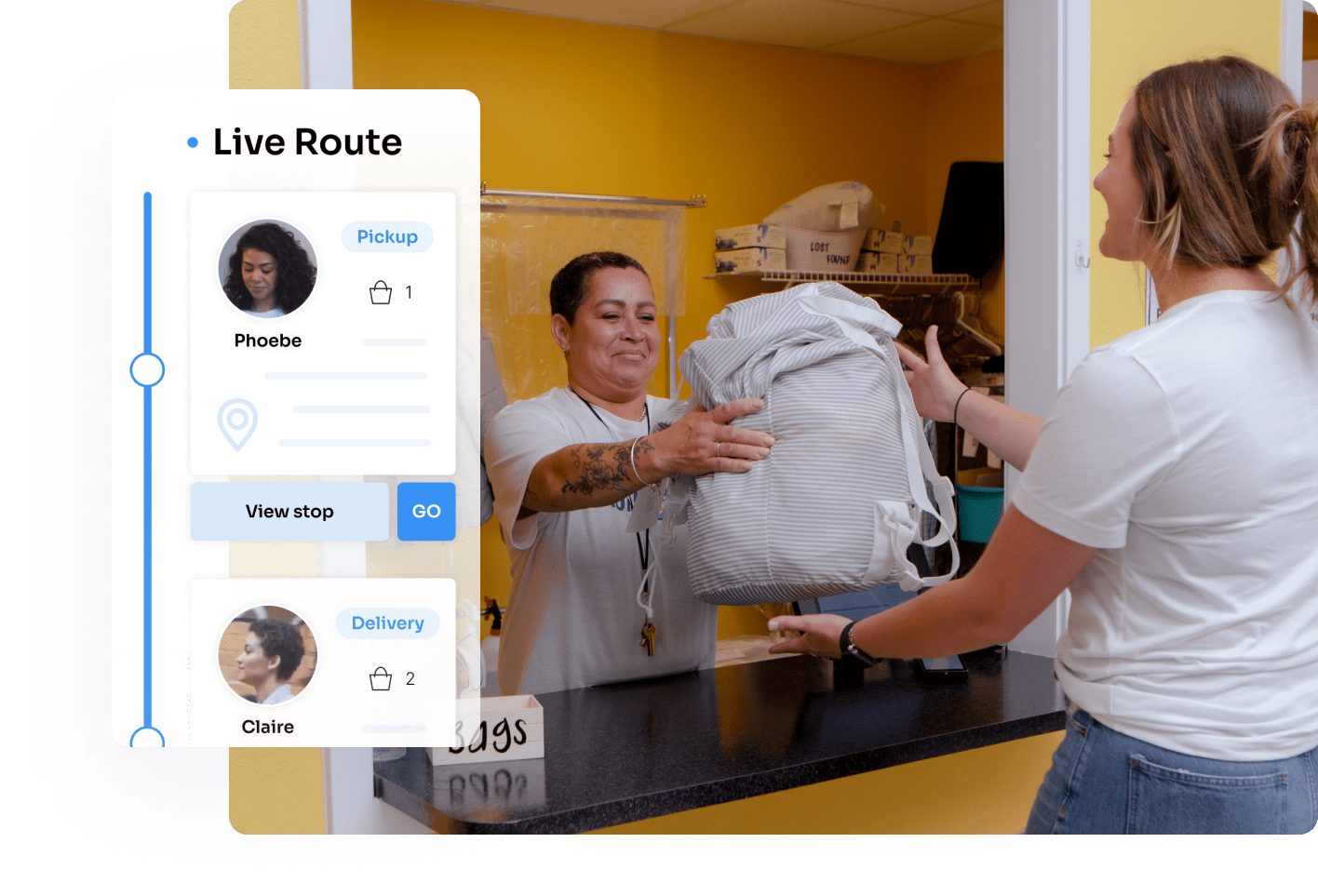
Everything above gets meaningfully easier when your technology is built to run more than one address. Cents Business Manager gives you one login for reporting, staffing, and operations across every location. Cents Connect and Laundroworks keep your machines online and visible remotely, critical the moment you're not physically present at every site, every day. Cents Assist covers phone and order volume for both stores without adding headcount, and Cents Dispatch lets a single pickup-and-delivery operation serve multiple storefronts instead of building a separate route for each.
If you want to see how other owners made this exact jump, Tiny Bubbles' two-location expansion across two very different Virginia markets and Neptune Laundry's growth to five Boston-area stores are both worth a read before you sign your next lease.
Ready to Open Your Second Location?
Scaling to a second laundromat is one of the biggest moves you'll make as an owner, and it's a lot easier with the right systems in place before day one. Schedule a free demo with Cents to see how Business Manager, Cents Connect, Cents Assist, and Cents Dispatch work together to support two locations (or twenty) without doubling your workload. Have questions first? Talk to our team, schedule time with a Customer Success Manager, or explore more growth resources for laundromat owners.
.png?width=400&height=200&name=BestWash_BlogBanner%20(2).png)